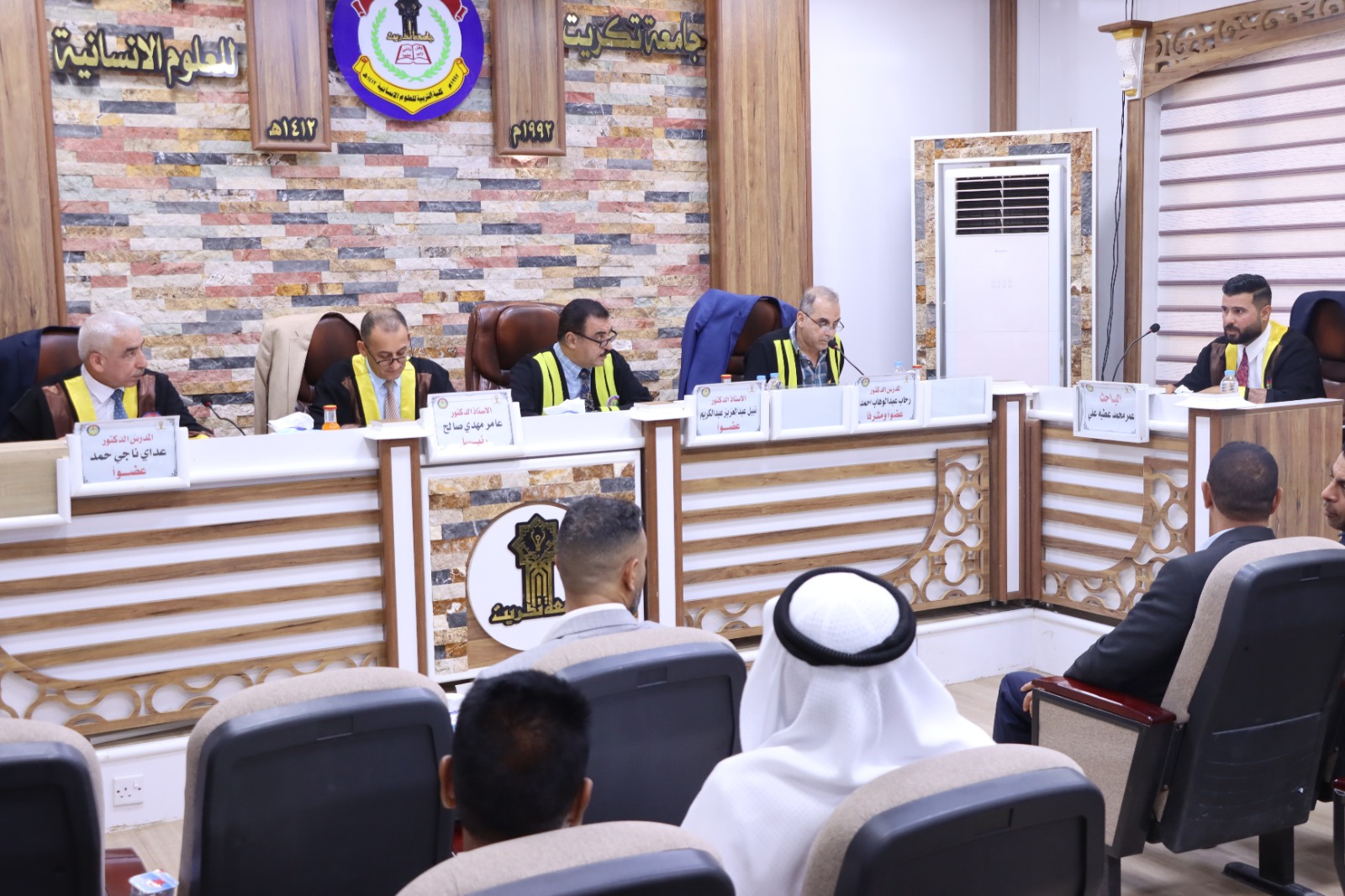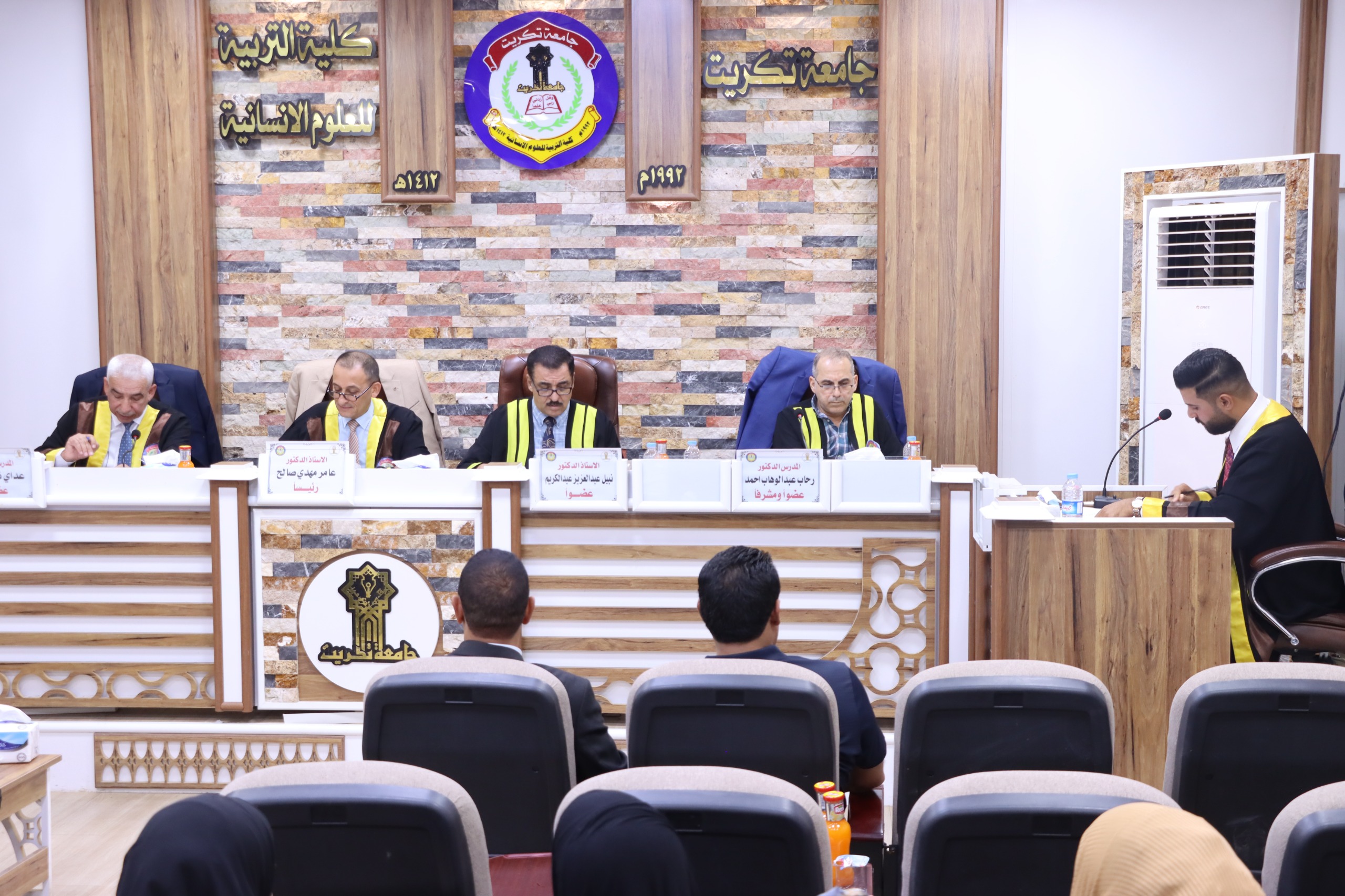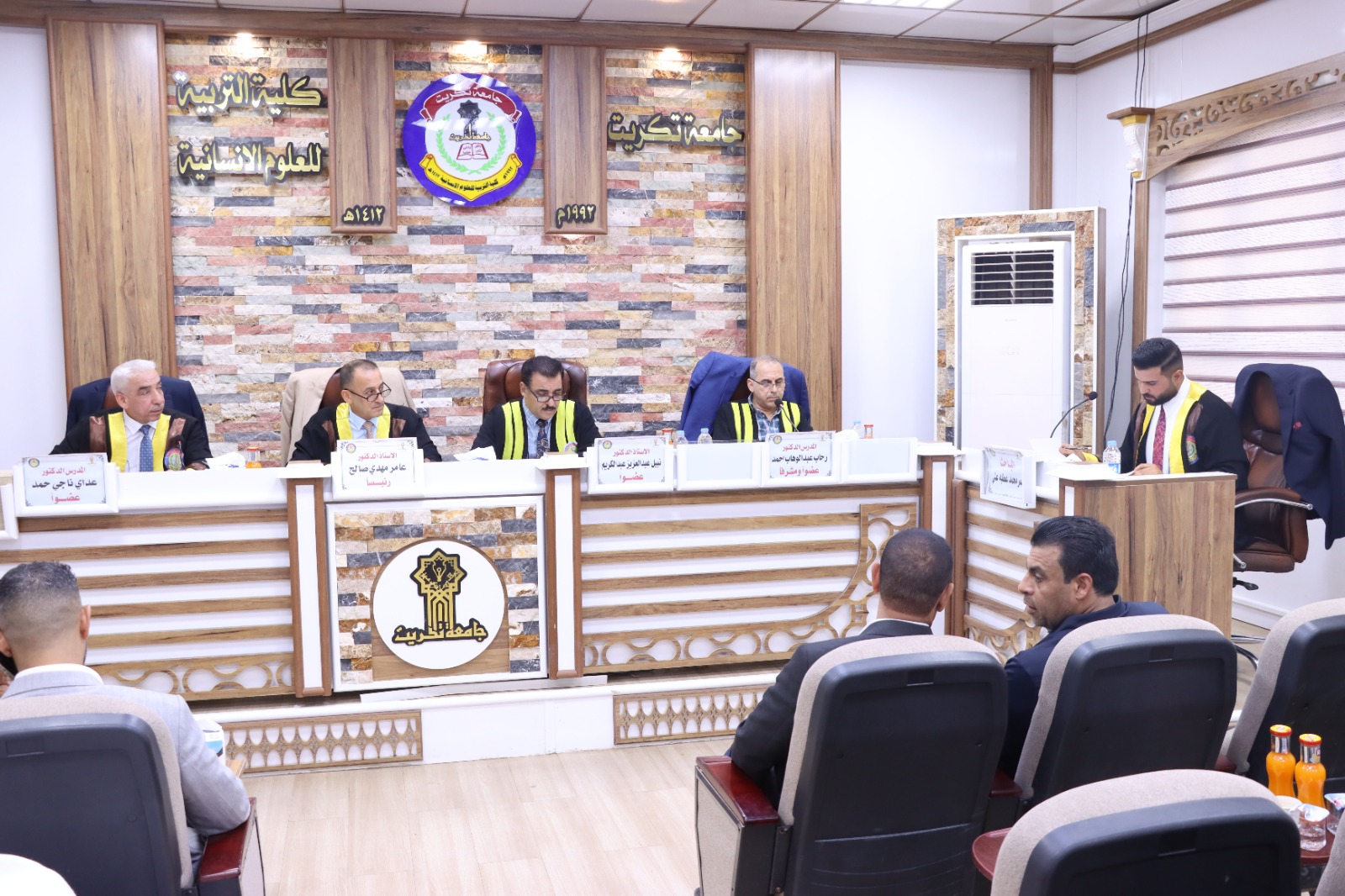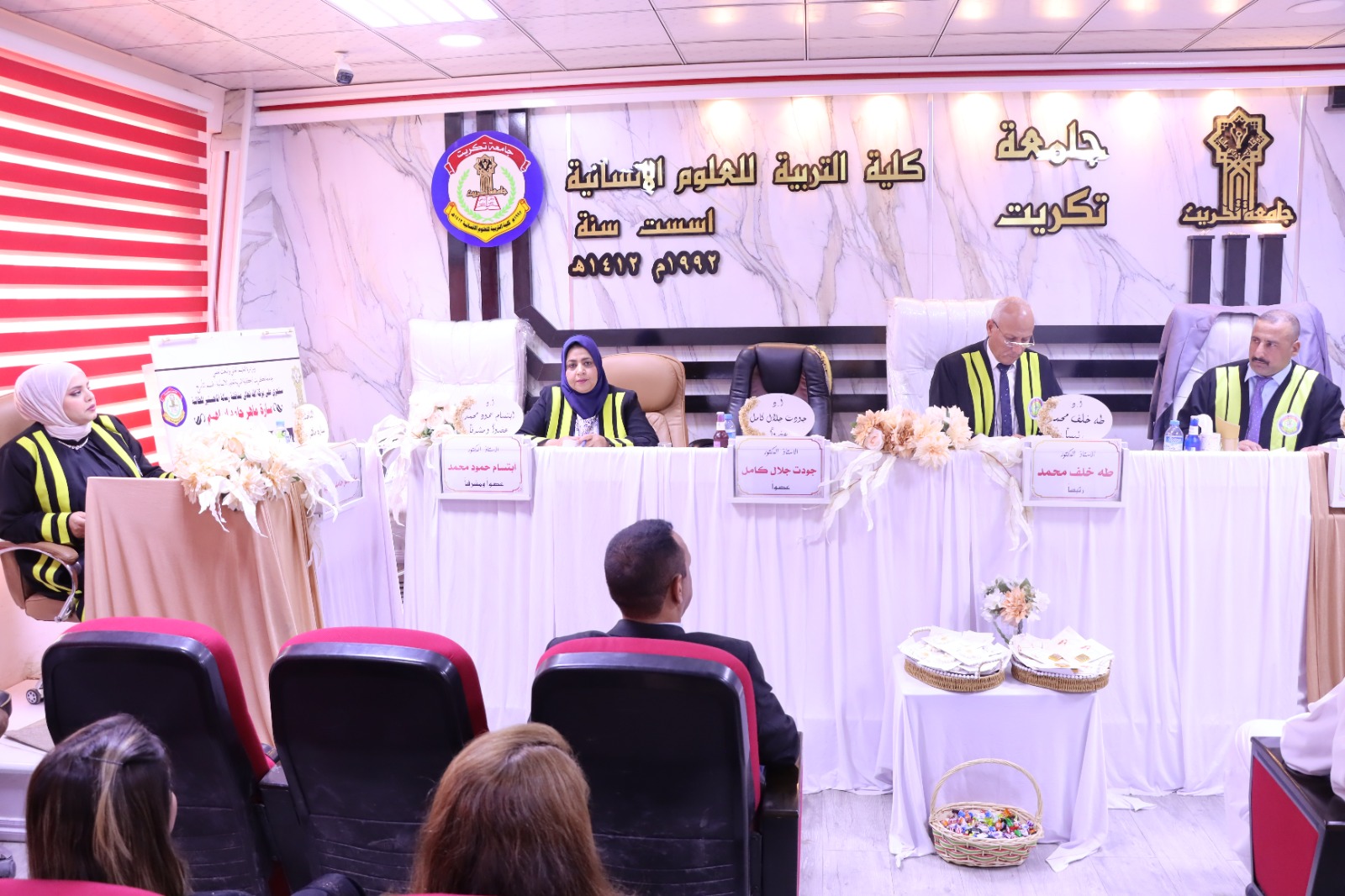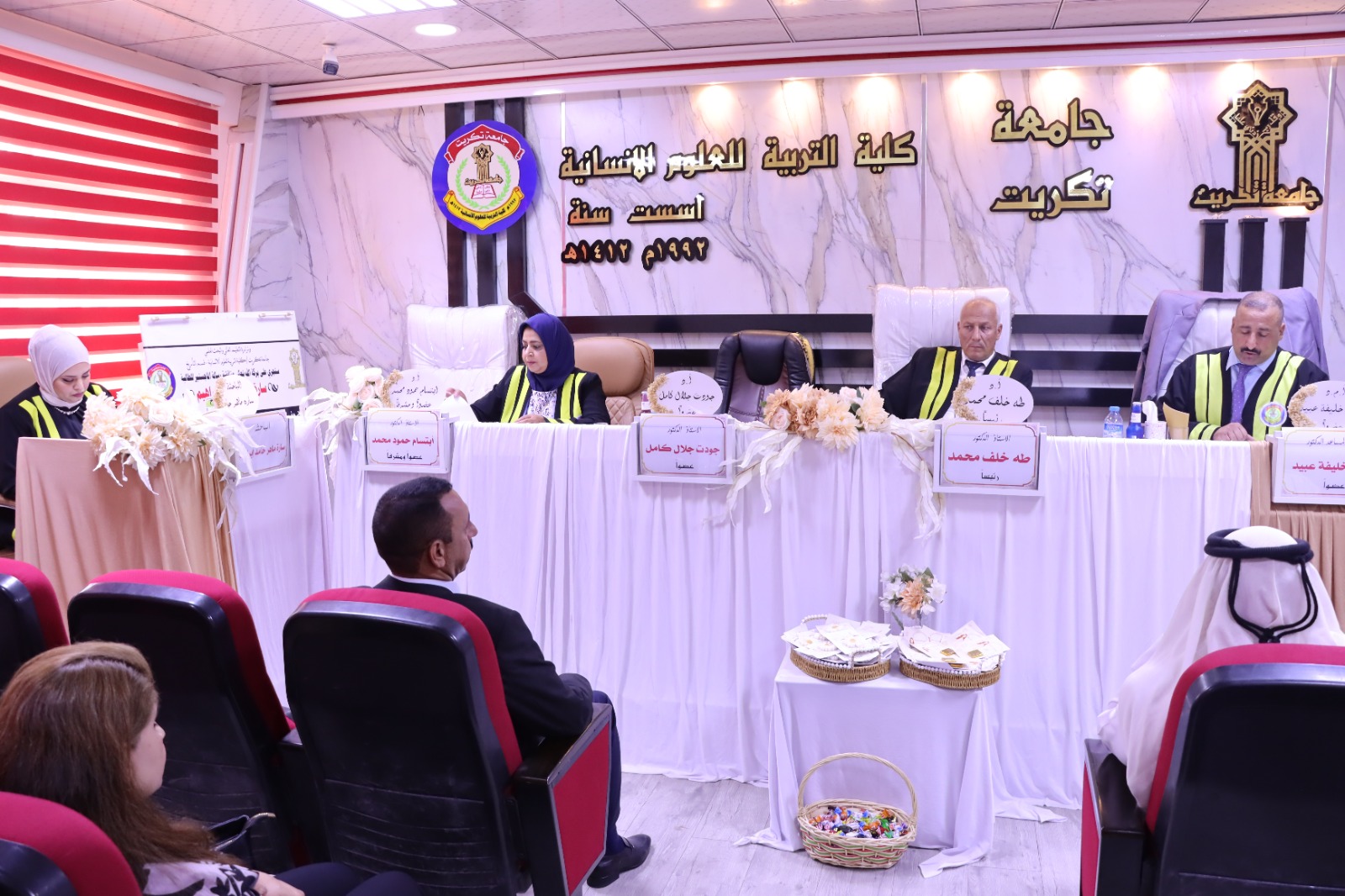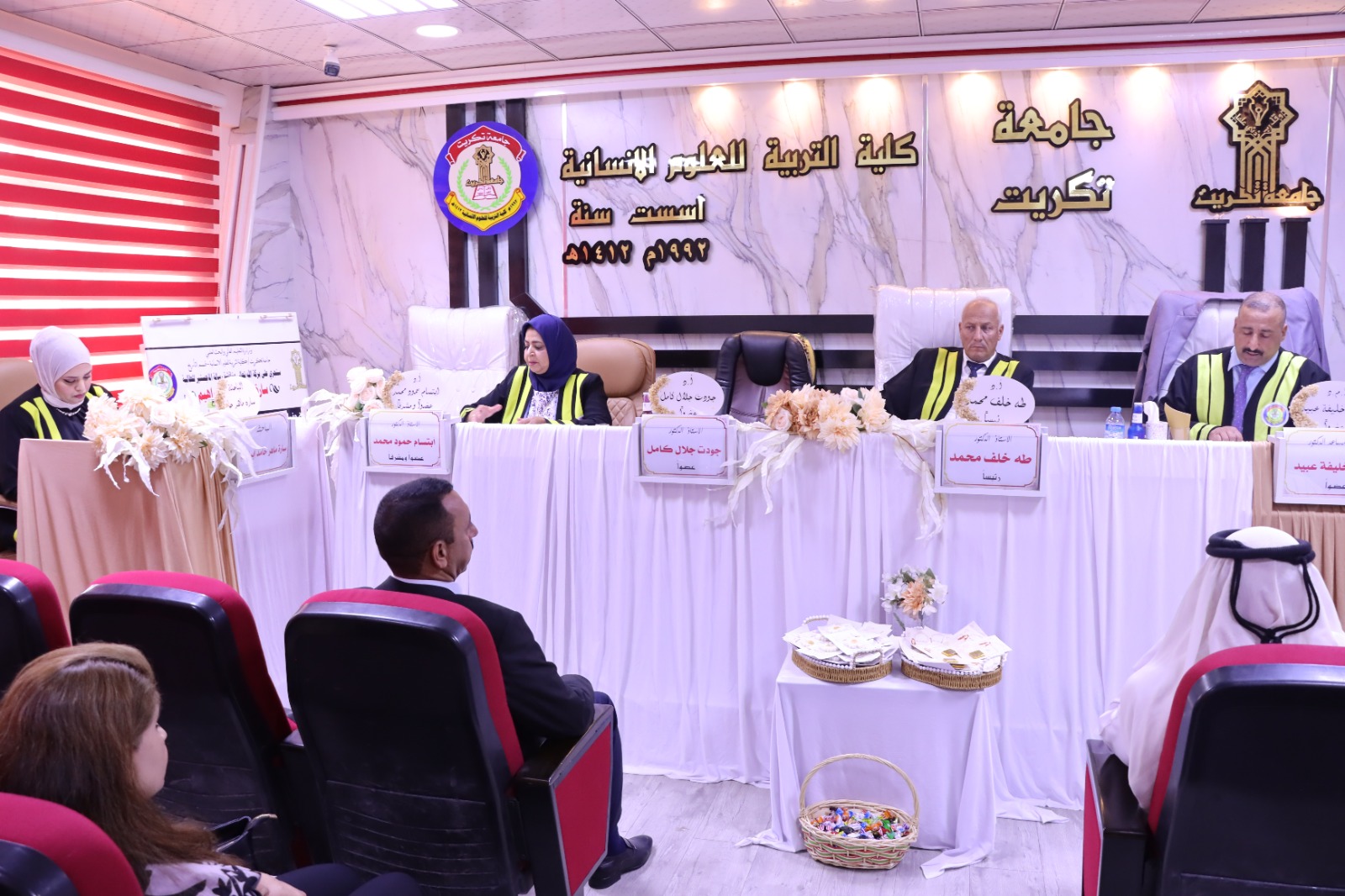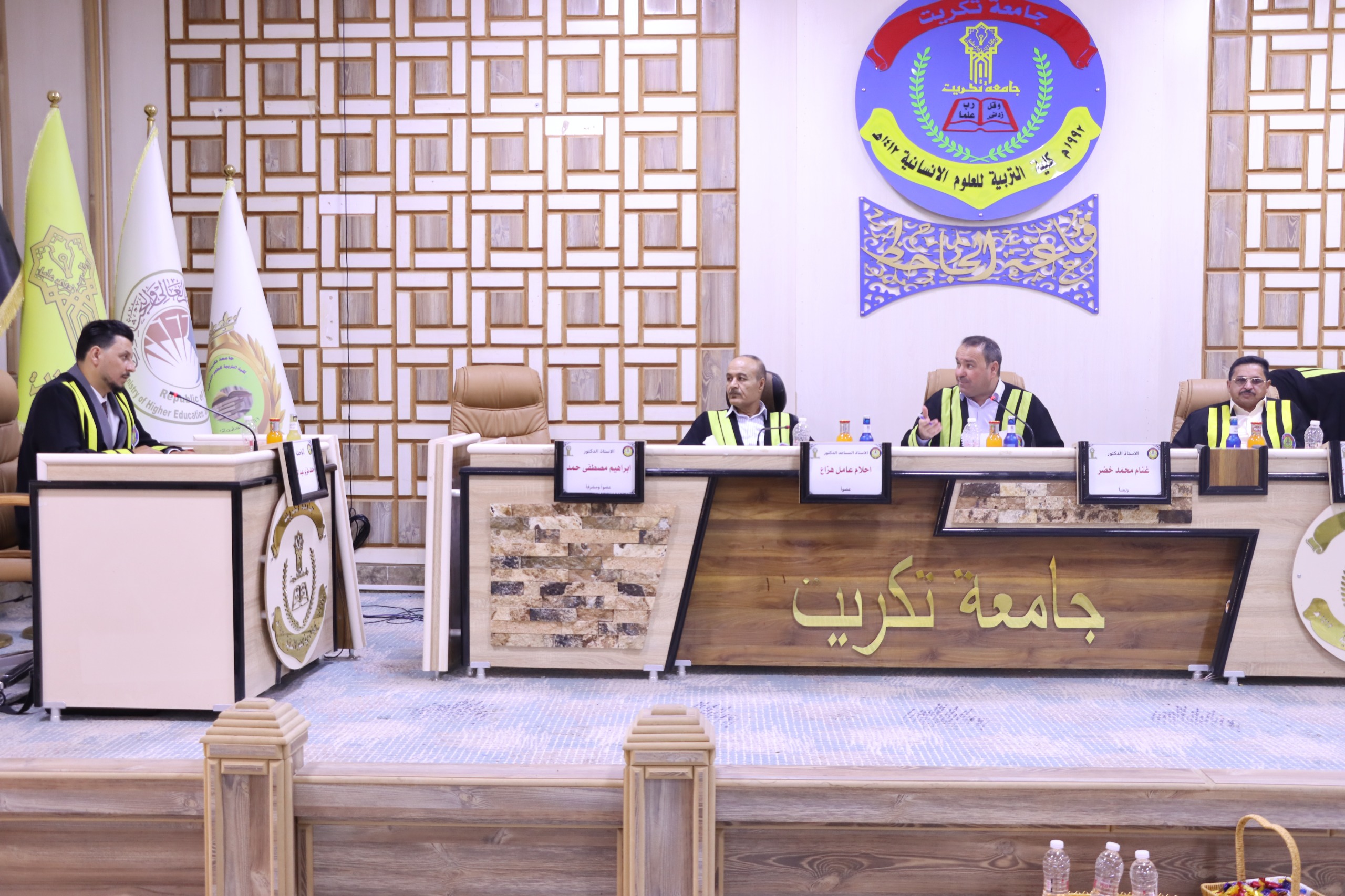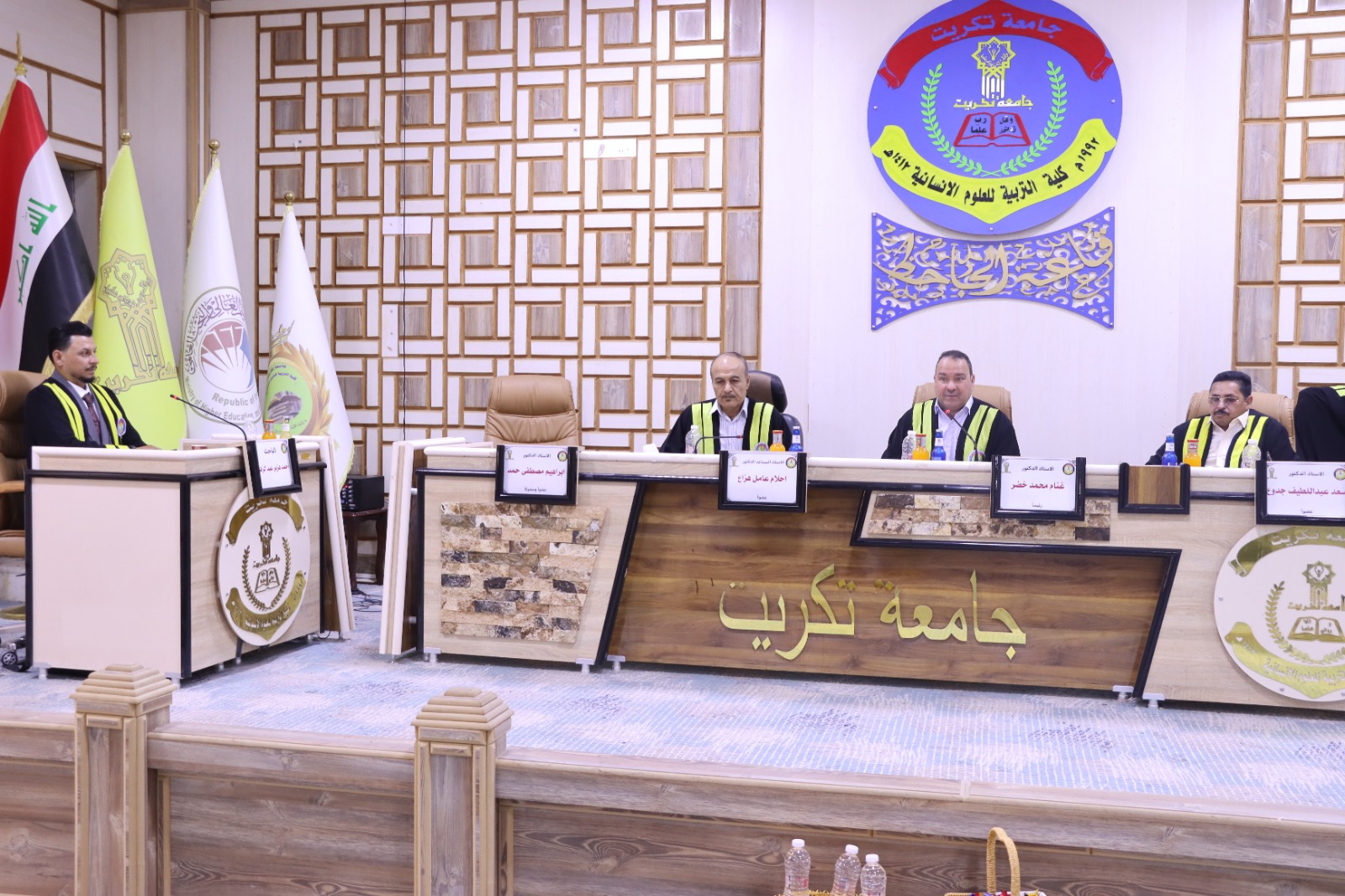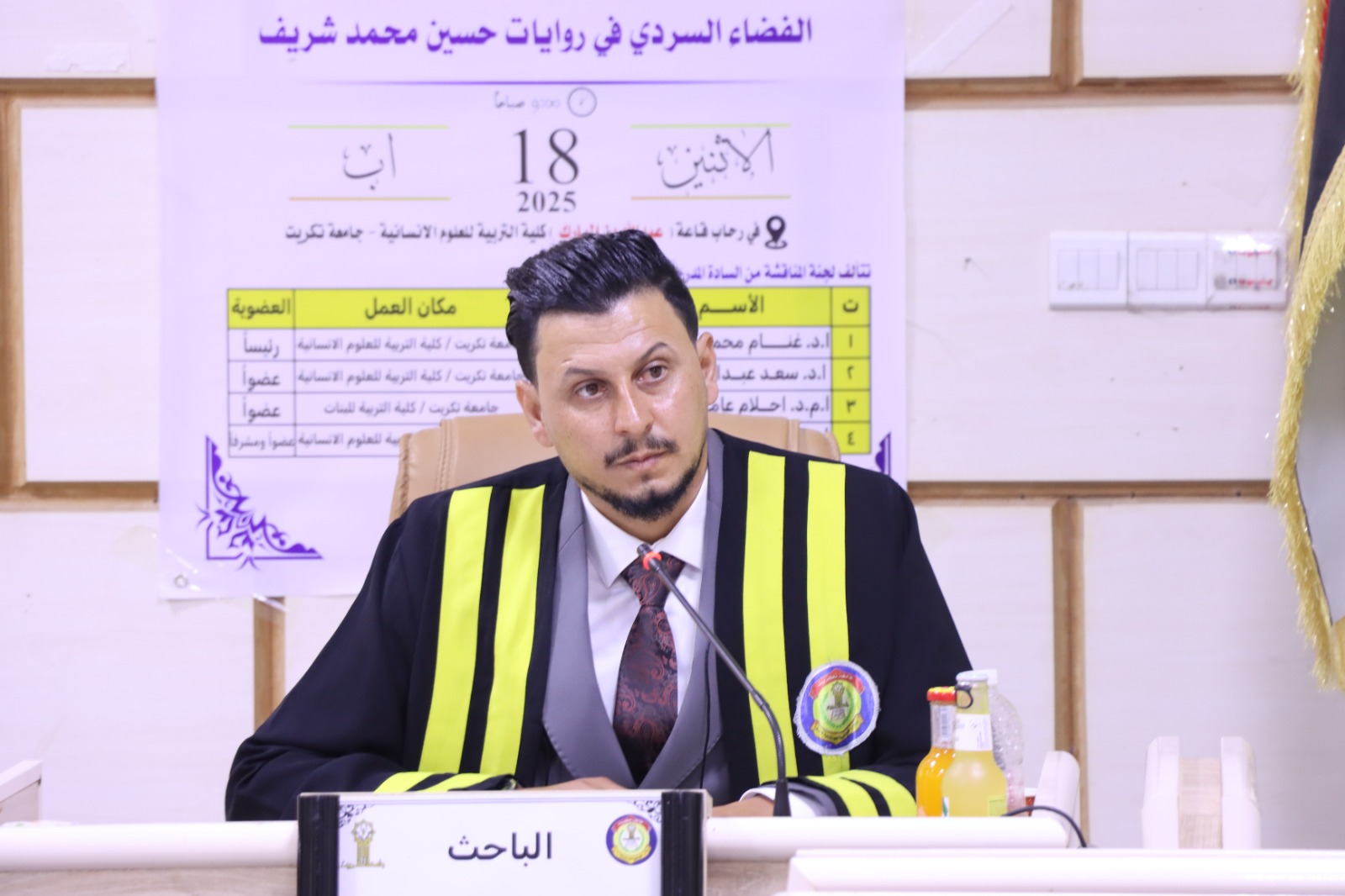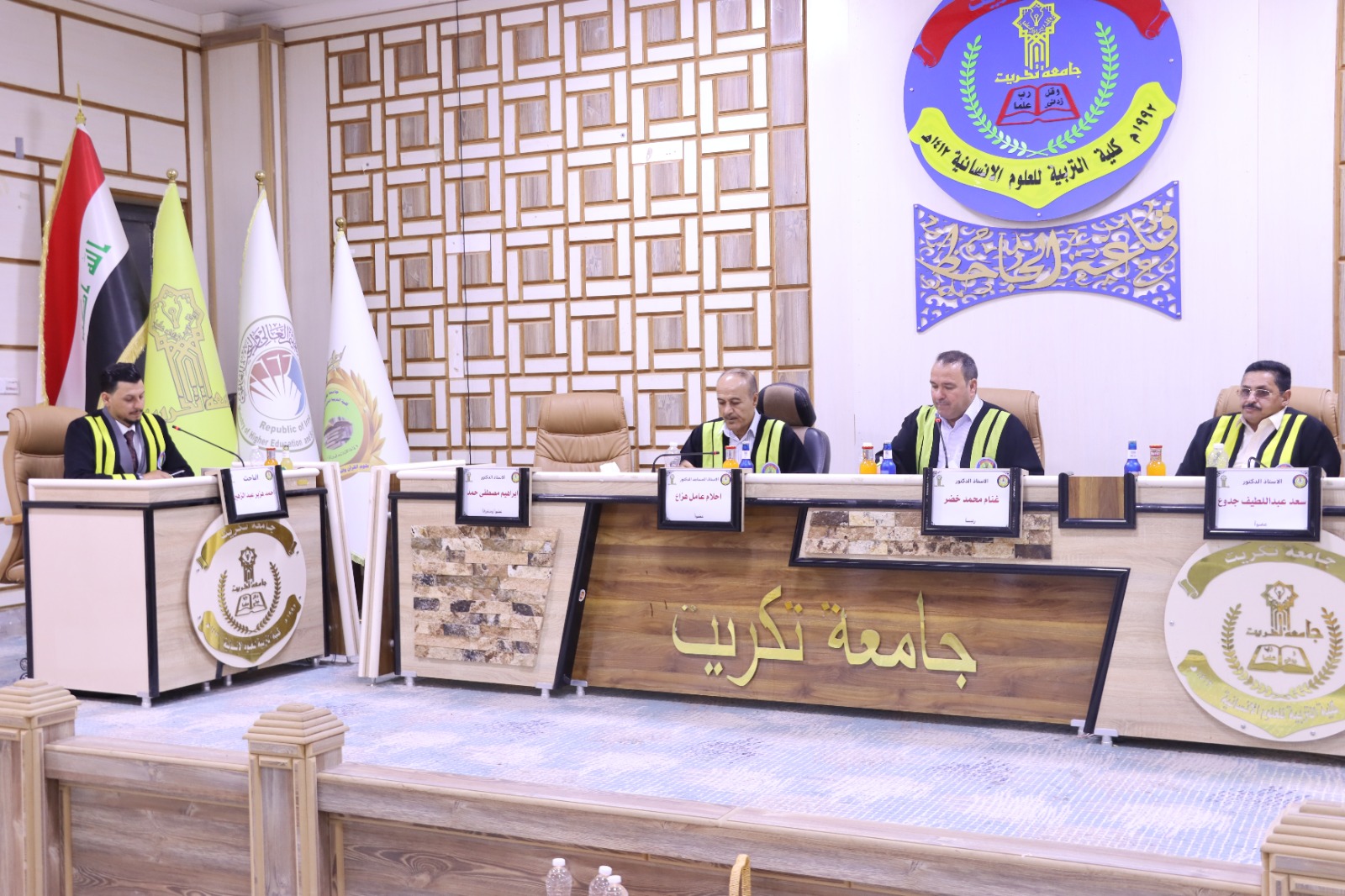
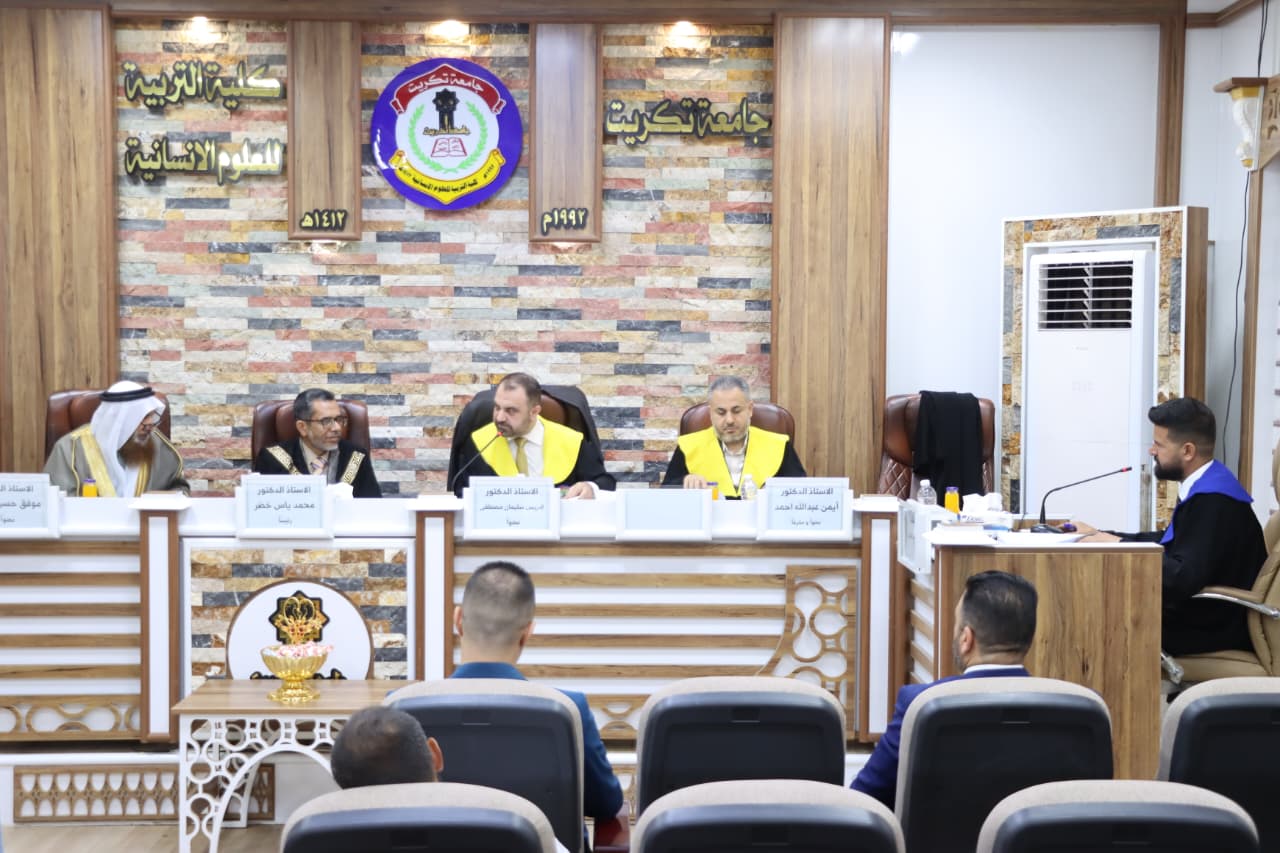
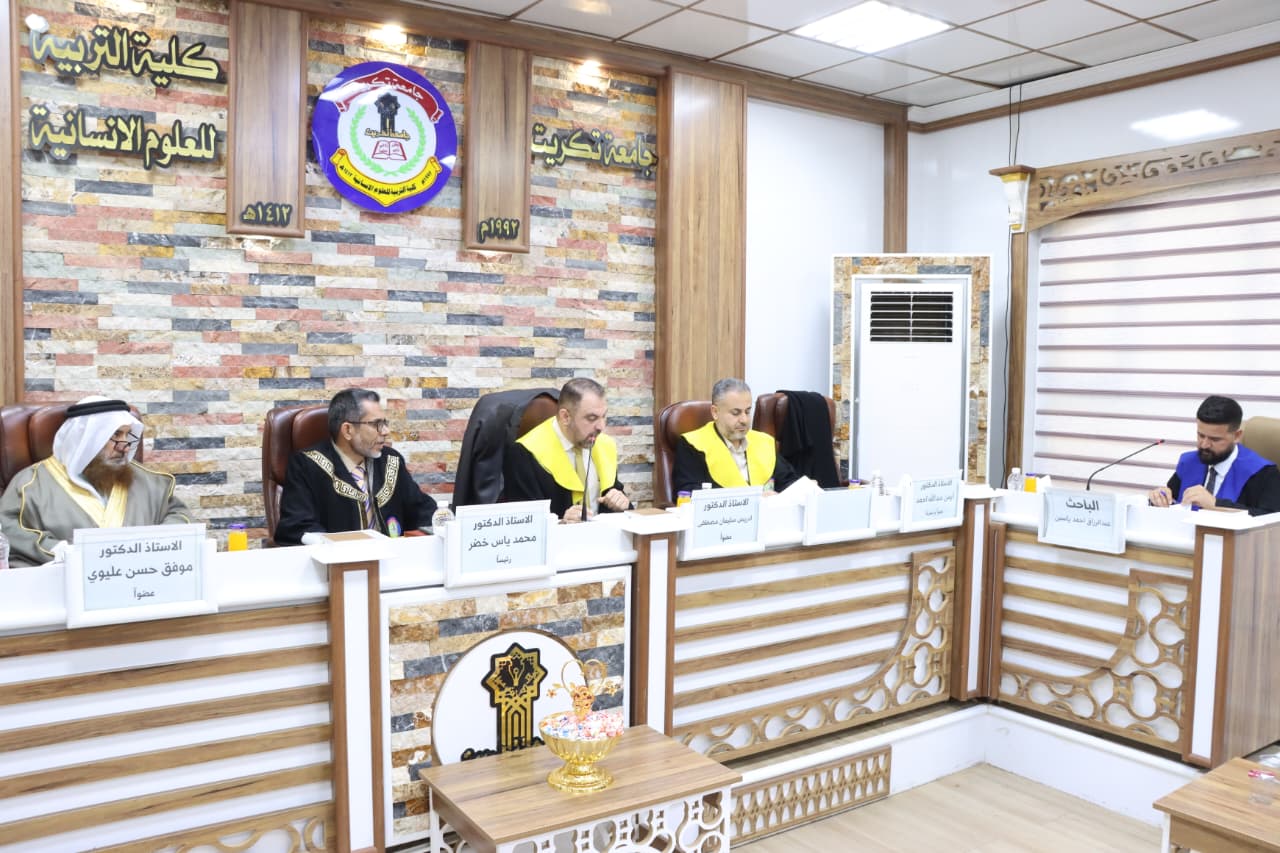
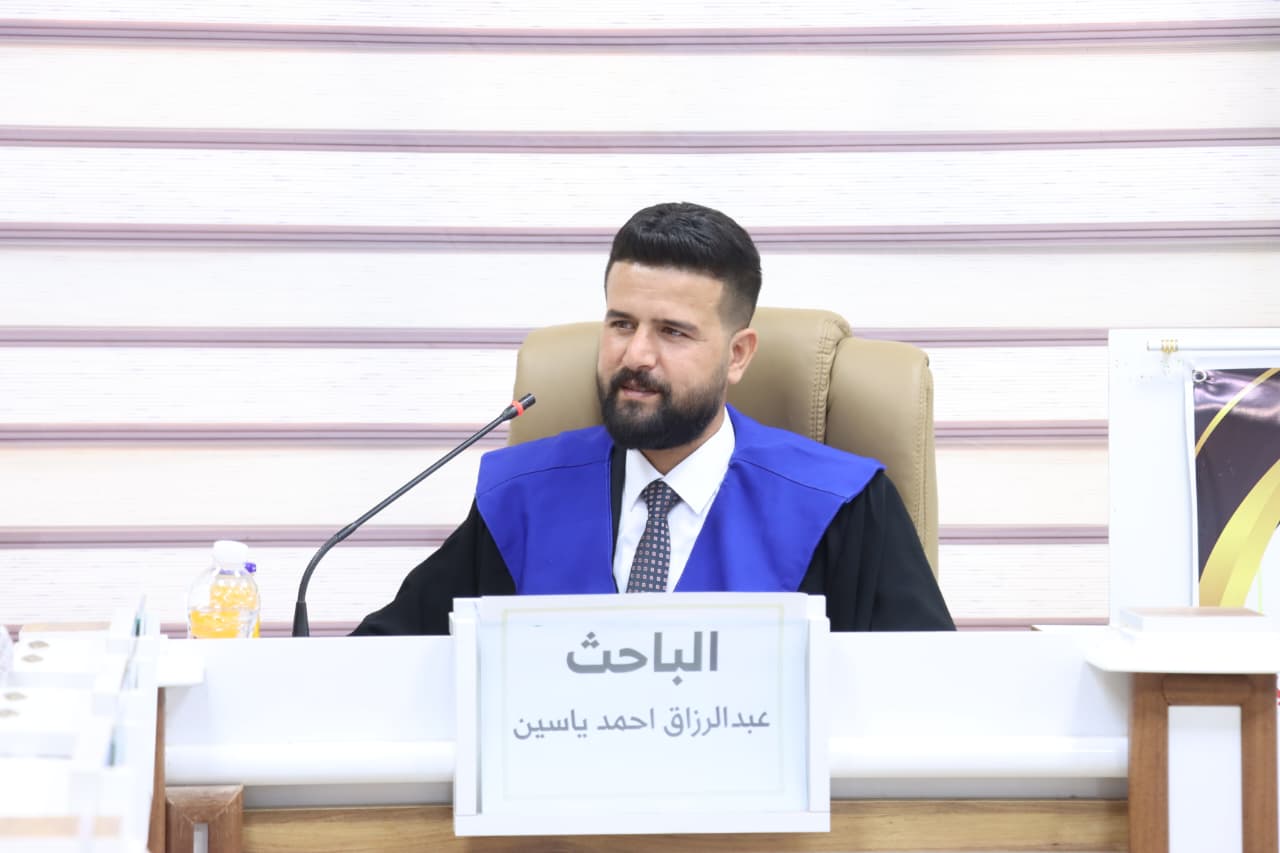
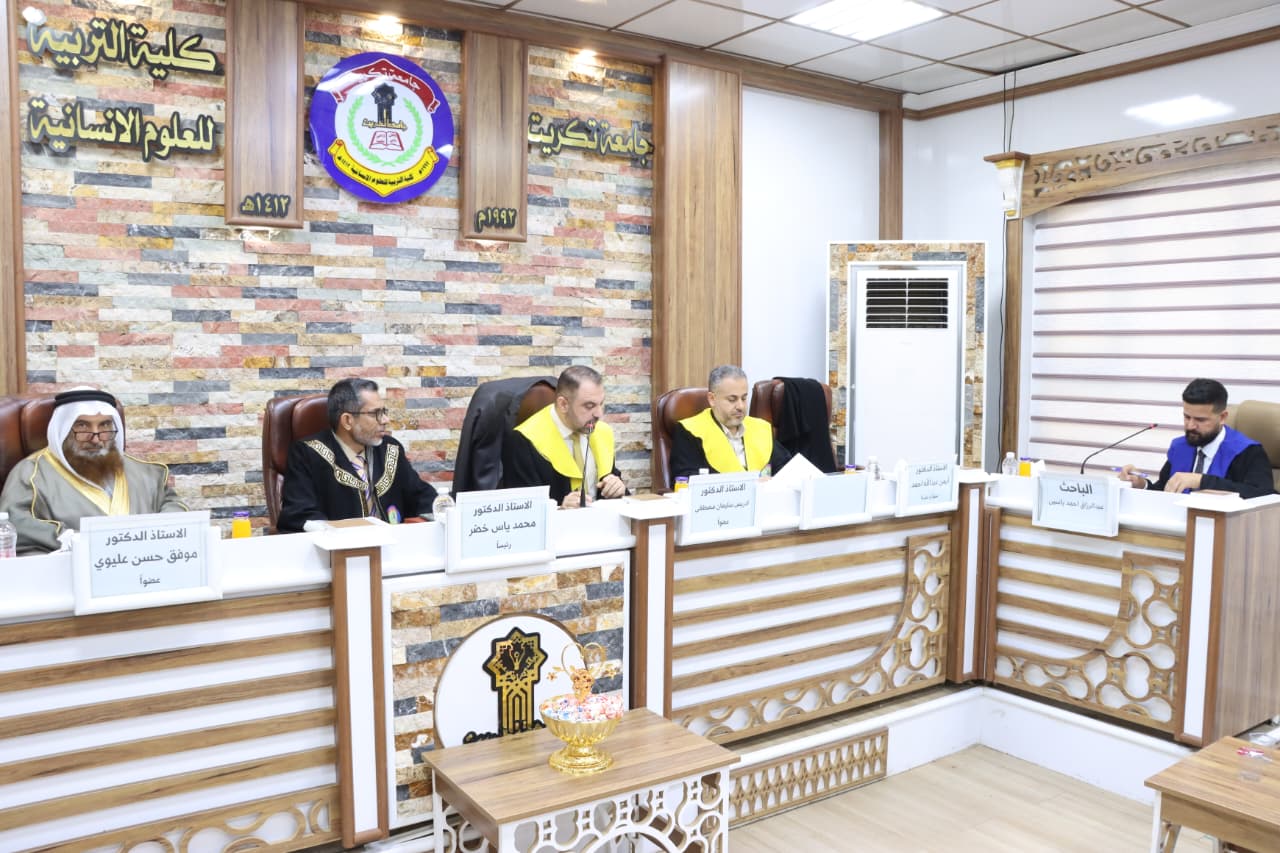
The College of Education for Humanities, Department of Arabic Language, discussed on Wednesday, 22 April 2026, the master’s thesis submitted by the student Abdulrazzaq Ahmed Yaseen Al-Jubouri, entitled:
“The Grammatical Poetic Evidence in the Book Al-Lubab fi ‘Ilal al-Bina’ wa al-I‘rab by Abu Al-Baqa’ Al-‘Akbari (d. 616 AH).”
The study aimed to examine how Abu Al-Baqa’ Al-‘Akbari employed poetic evidence in his book Al-Lubab, and the extent of his reliance on poetic citations in establishing grammatical rules. It also investigated the scholarly judgments he issued regarding such evidence, as well as whether he maintained a balance between the views of the grammatical schools.
The thesis was structured into two chapters preceded by an introduction and a theoretical framework, and followed by a conclusion and references. The theoretical framework addressed the biography of Al-‘Akbari and his book Al-Lubab, in addition to defining poetic evidence linguistically and terminologically, and its role in the development of grammatical rule formulation.
The study reached several key findings, including:
- The book Al-Lubab fi ‘Ilal al-Bina’ wa al-I‘rab is considered one of the important grammatical works that had a significant impact on Arabic grammatical studies, as it presents a clear analytical approach that highlights grammatical disagreement and the role of poetic evidence in guiding and preferring grammatical judgments.
- Al-‘Akbari relied on poetic evidence as a fundamental source in linguistics, grammar, morphology, and other linguistic fields; however, this study focused specifically on its grammatical aspects.
- Despite Al-‘Akbari’s extensive knowledge in Arabic sciences, he often did not attribute poetic citations to their original poets. Many of the cited verses were either anonymous or unattributed, with most of his poetic evidence presented without reference to their authors.
The discussion committee consisted of the following members:
- Prof. Dr. Muhammad Yass Khader – University of Tikrit, College of Education for Humanities / Chair
- Prof. Dr. Muwaffaq Hussein Aliwi – University of Tikrit, College of Education for Humanities / Member
- Prof. Dr. Idris Suleiman Mustafa – University of Mosul, College of Education for Humanities / Member
- Prof. Dr. Ayman Abdullah Ahmed – University of Tikrit, College of Education for Humanities / Member and Supervisor
Media and Government Communication Division – College of Education for Humanities – University of Tikrit