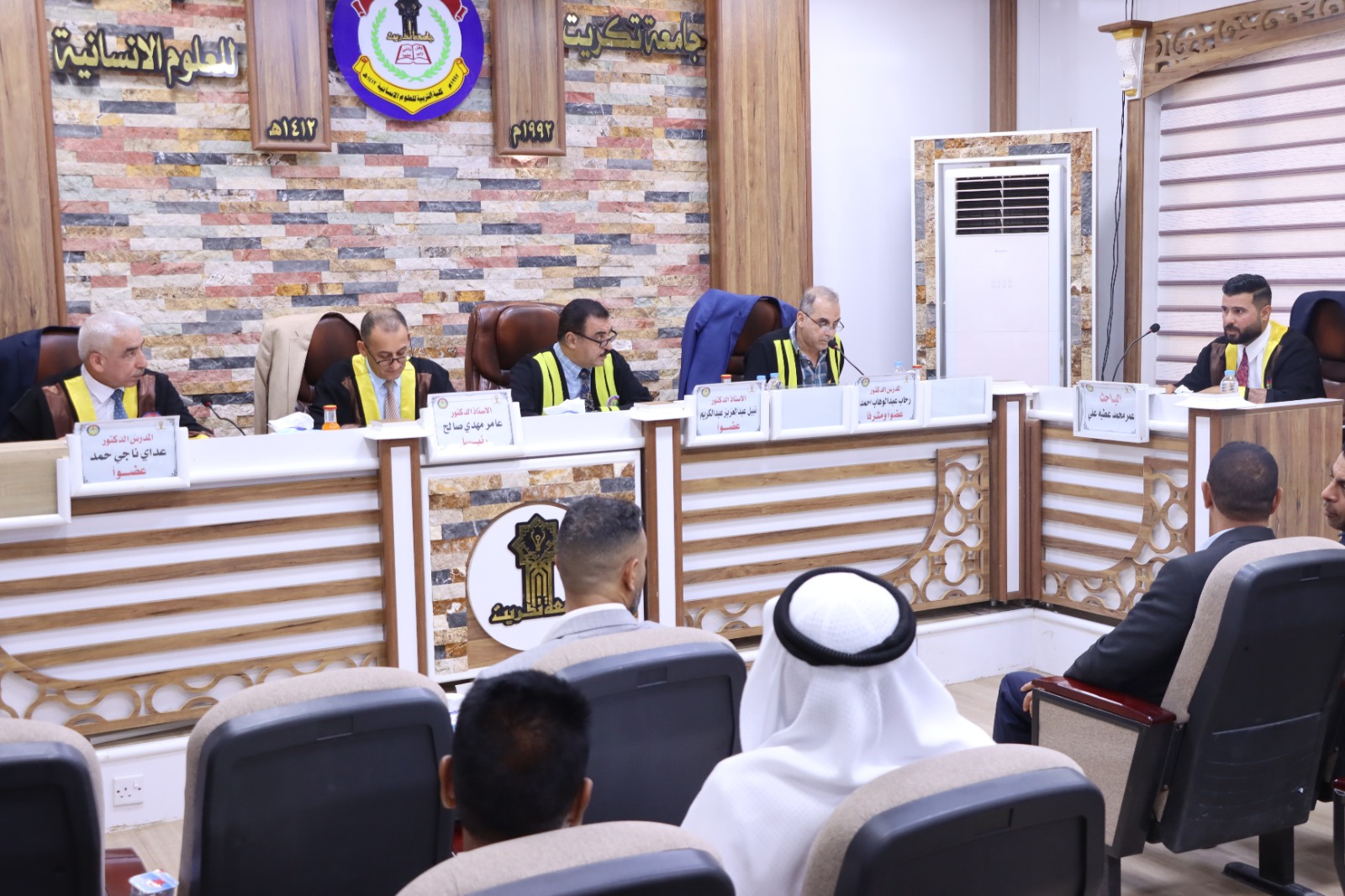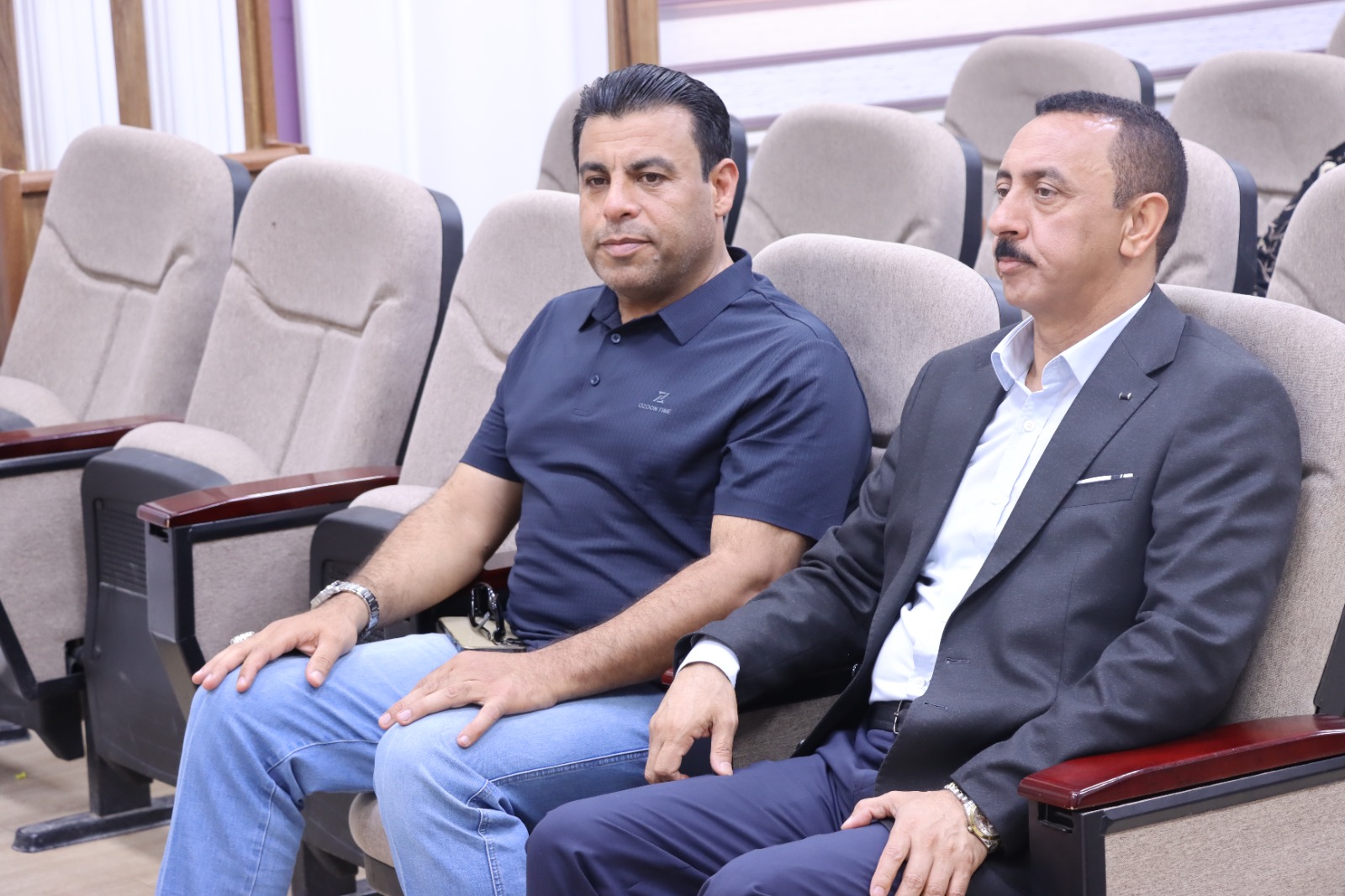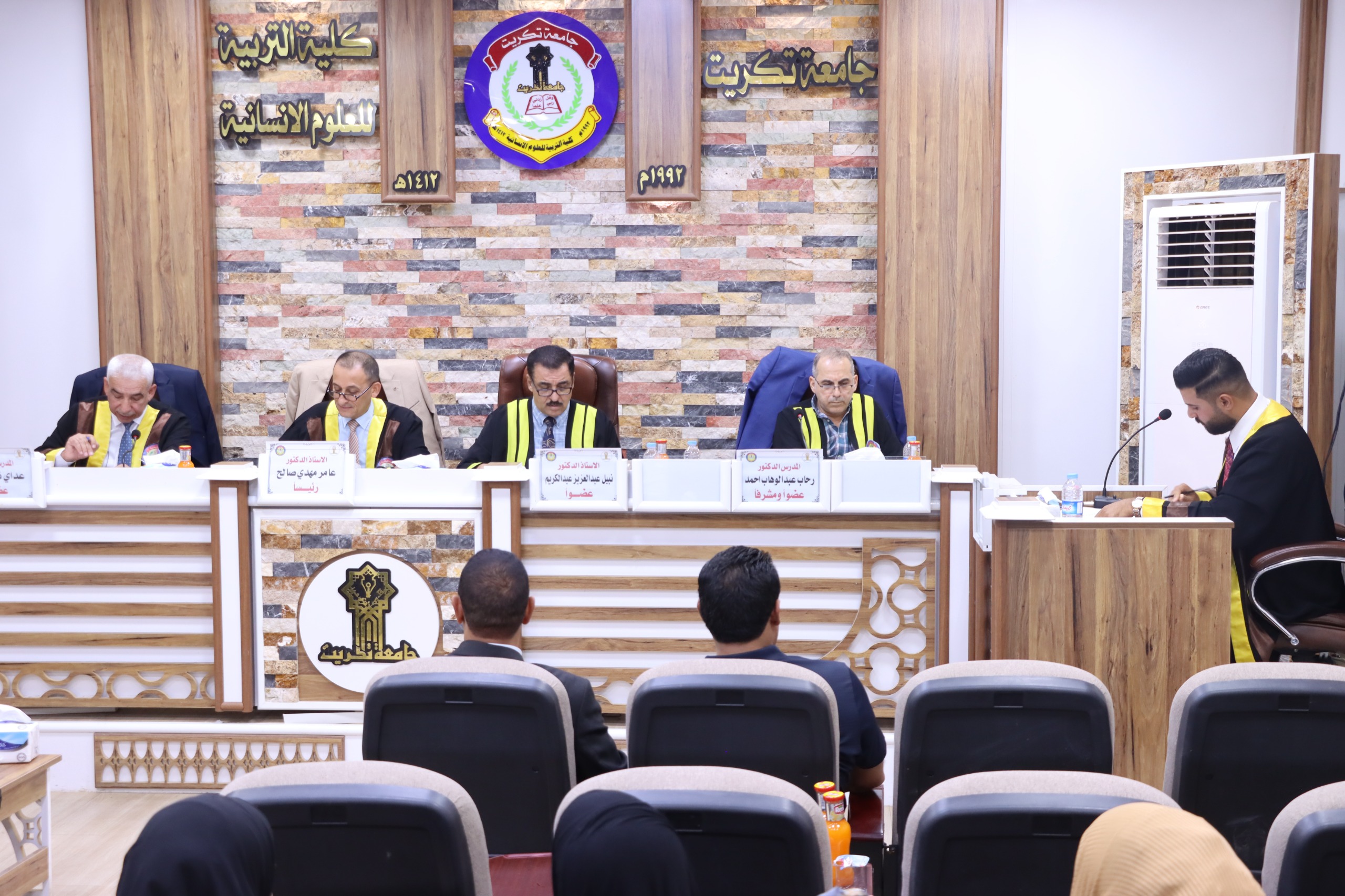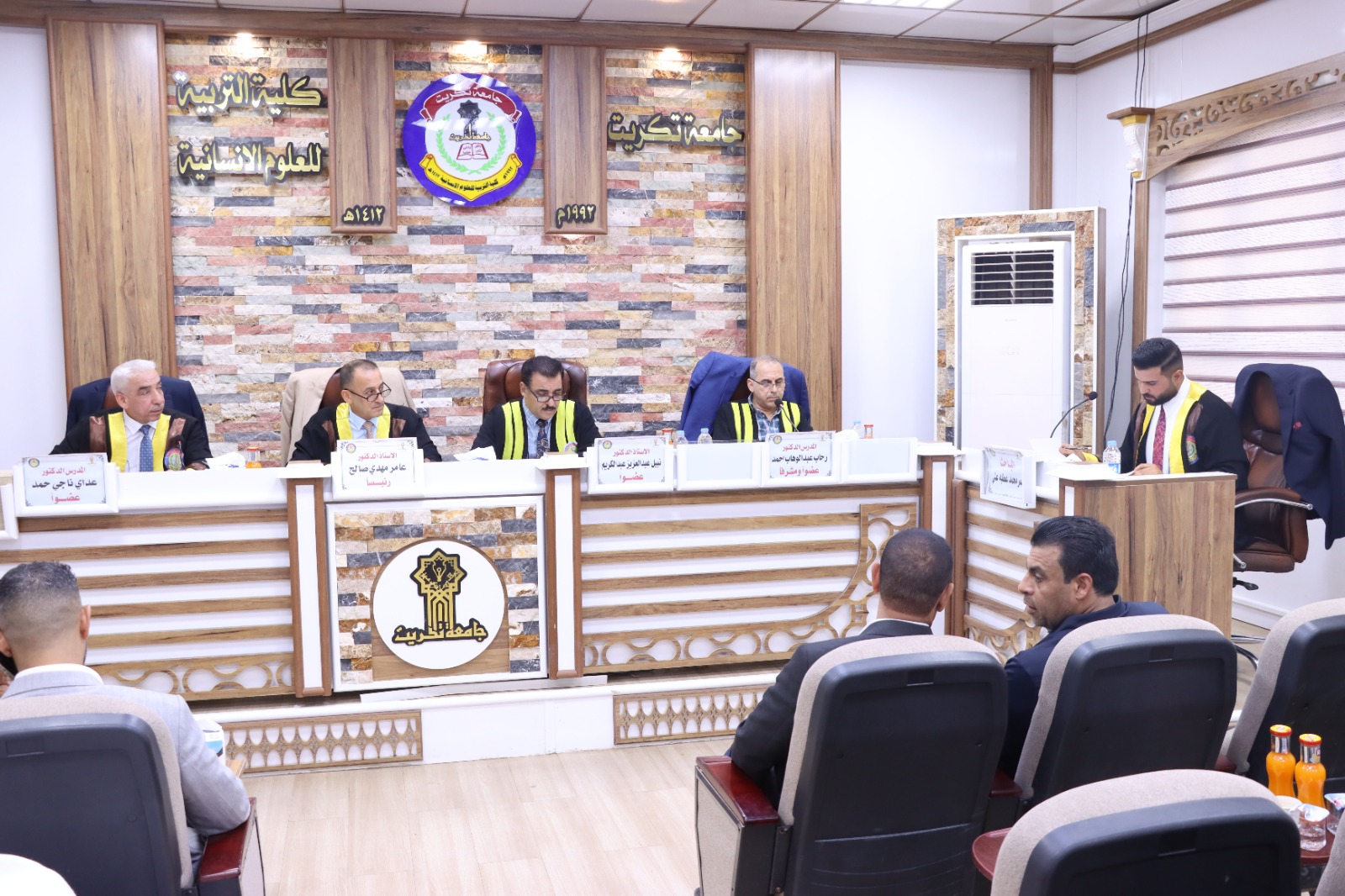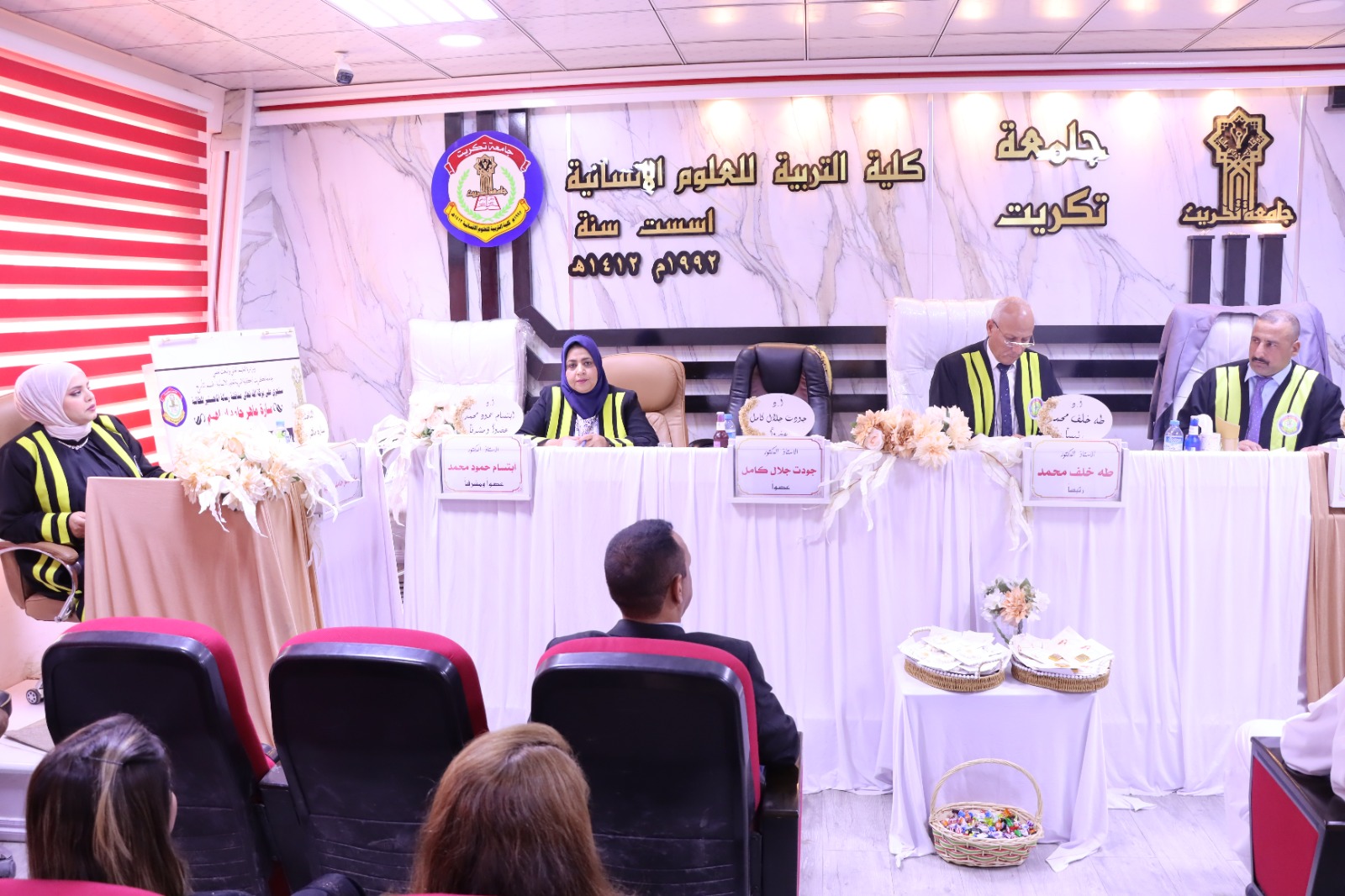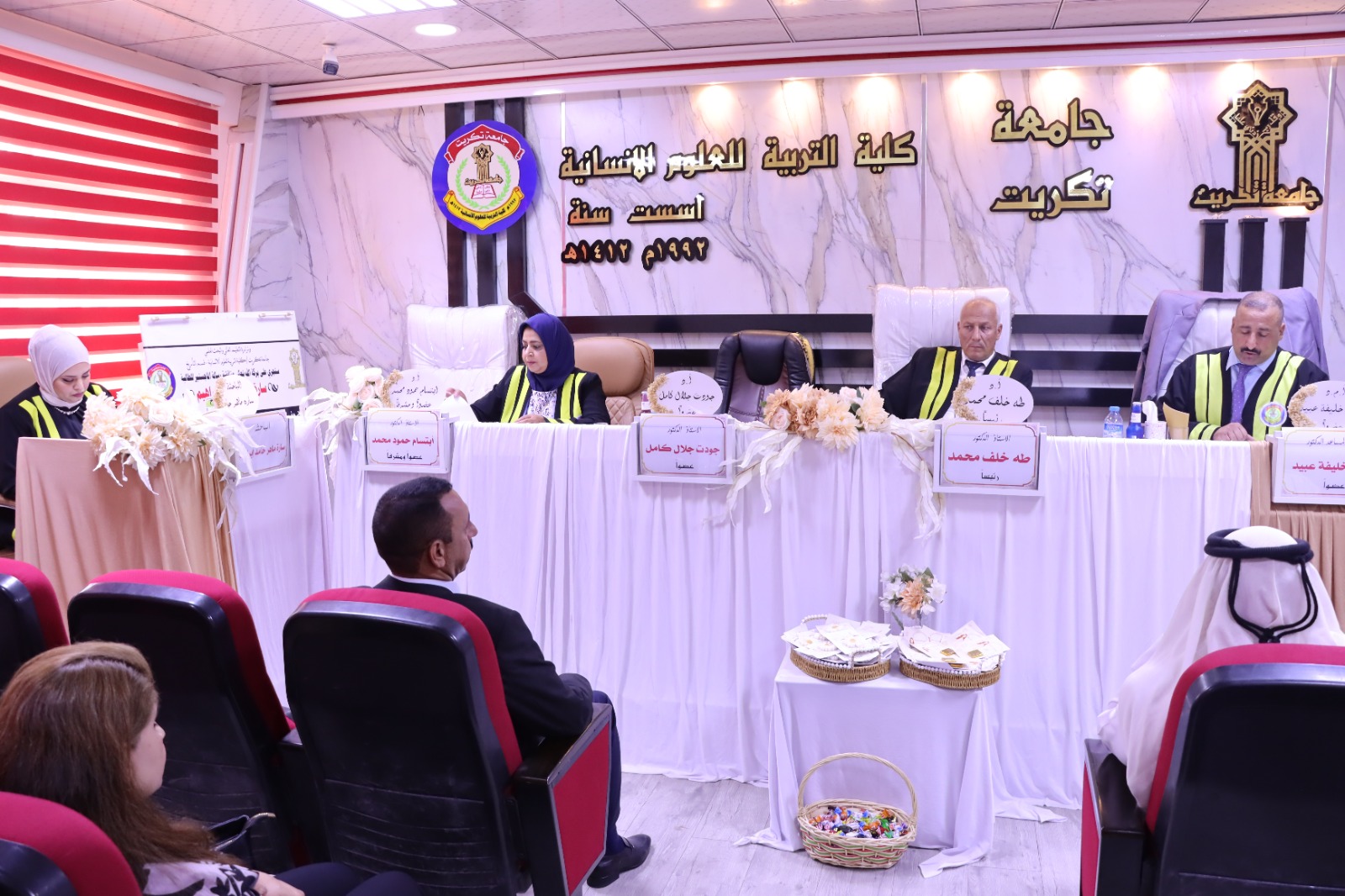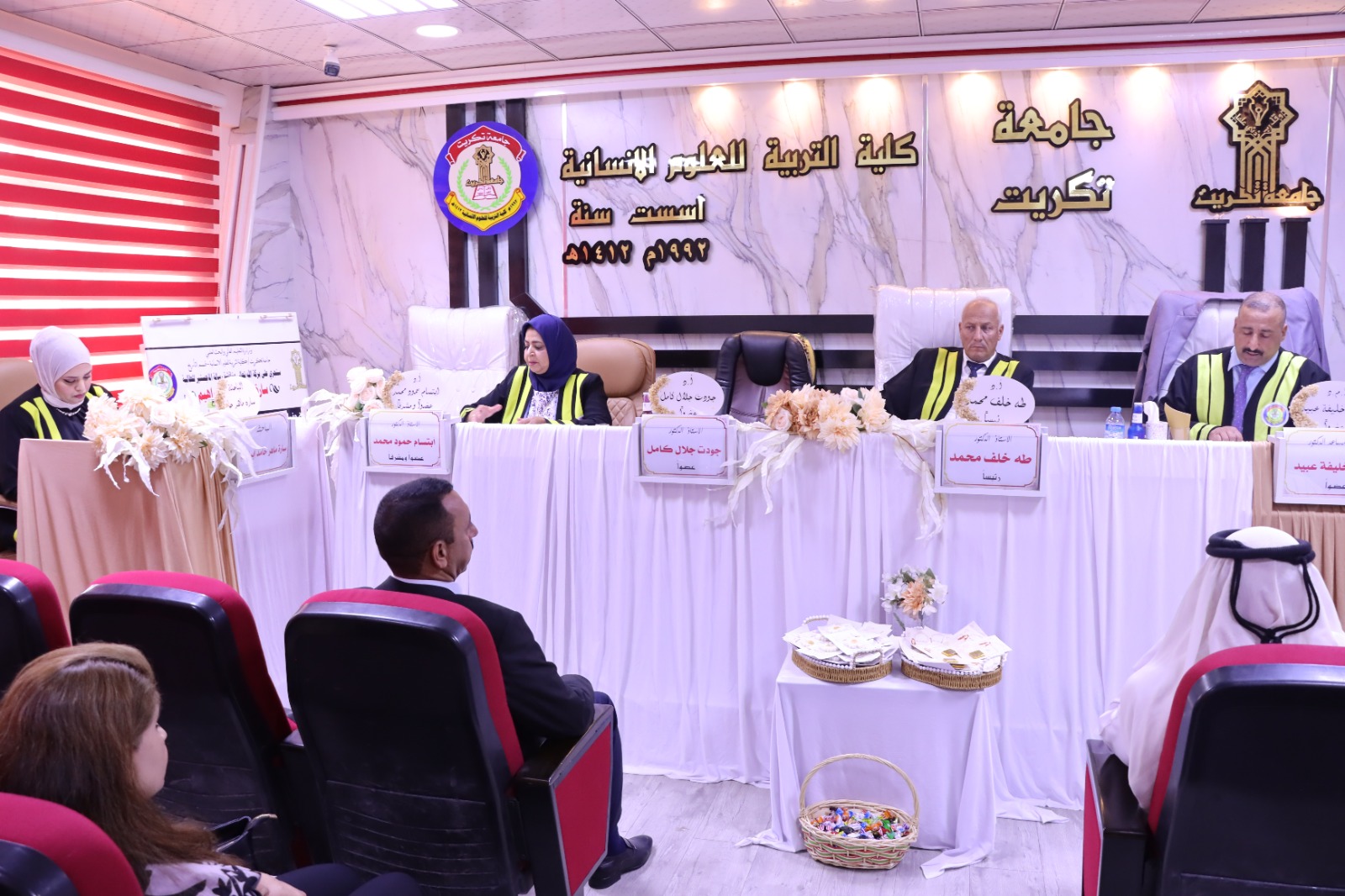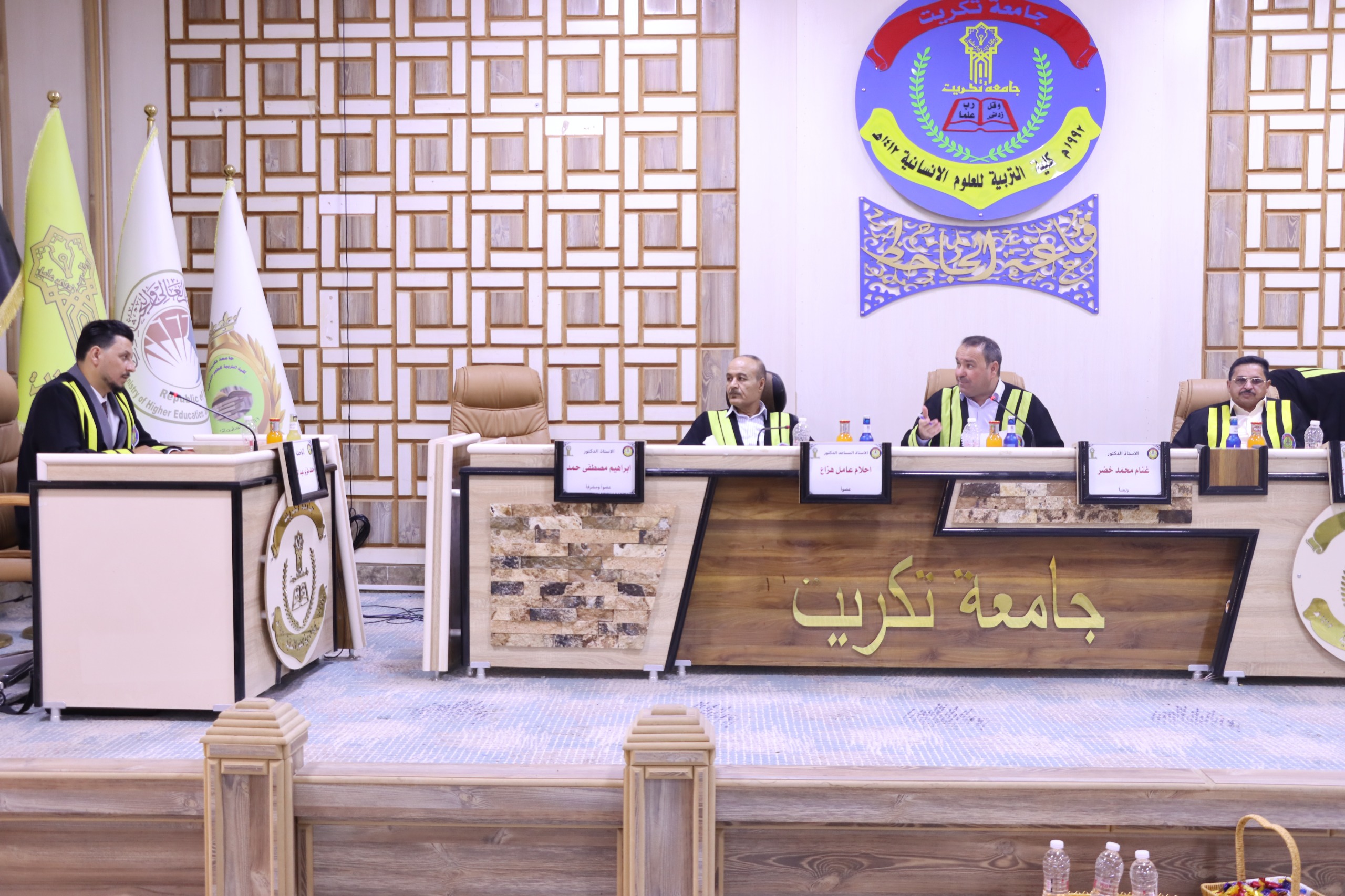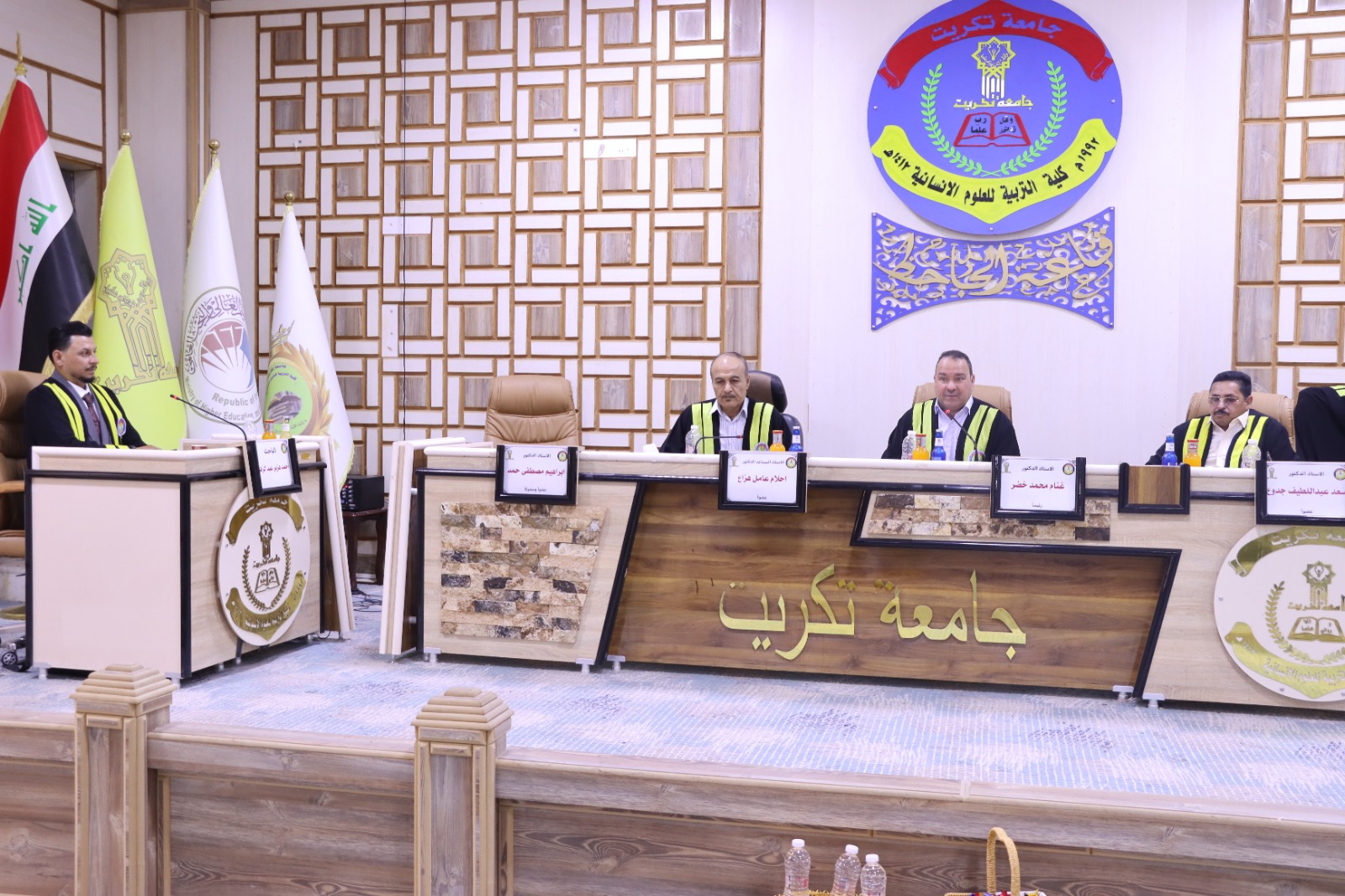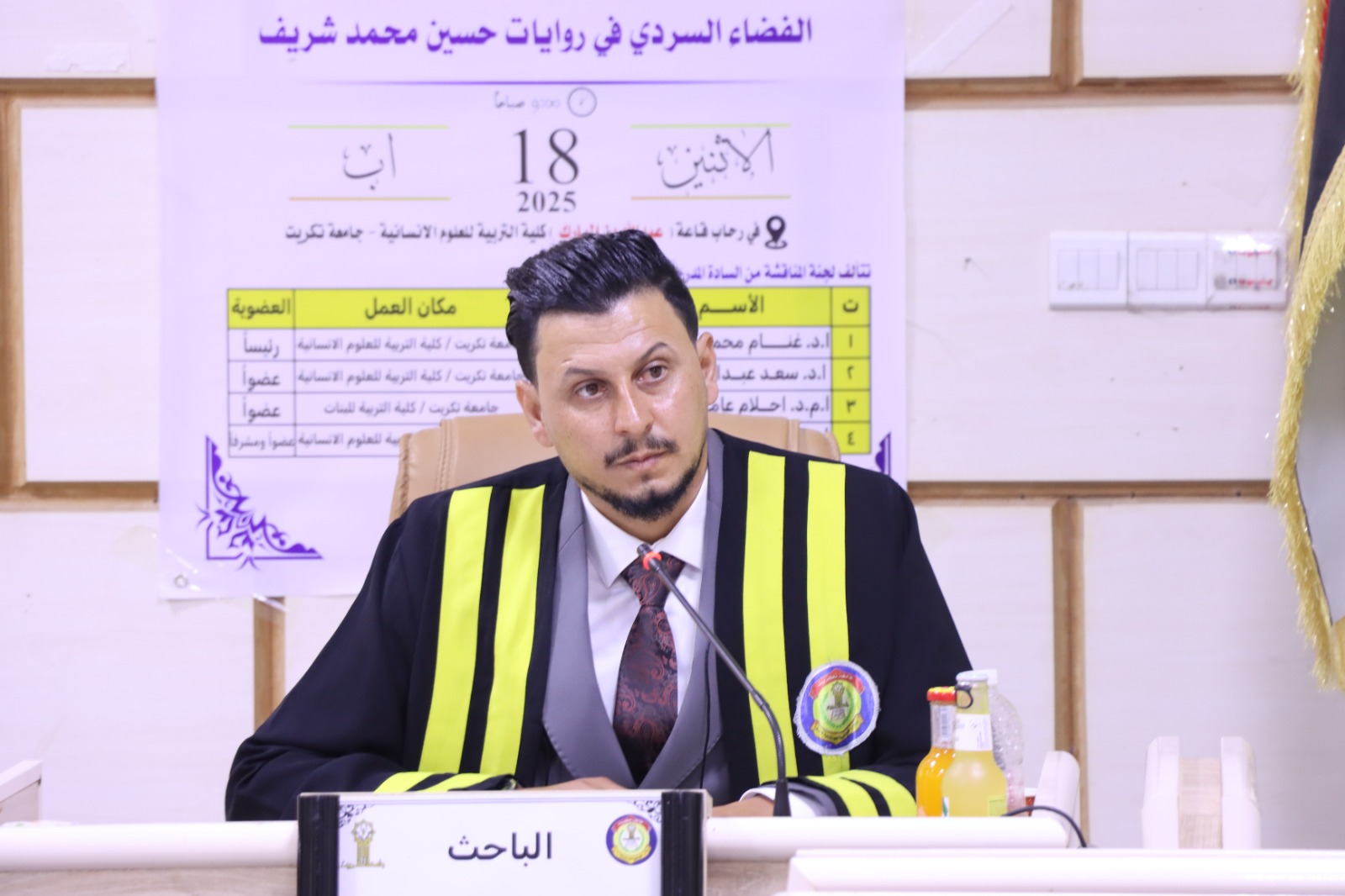
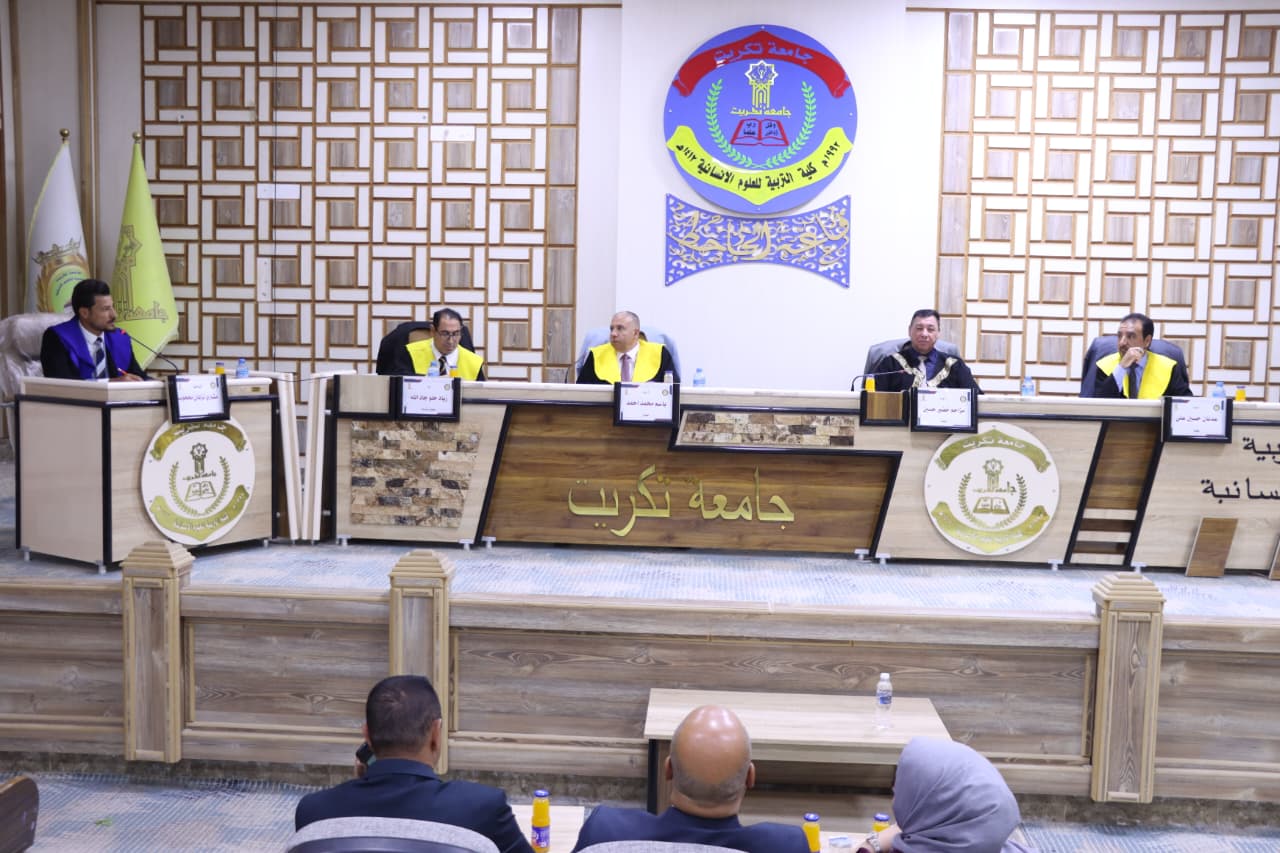
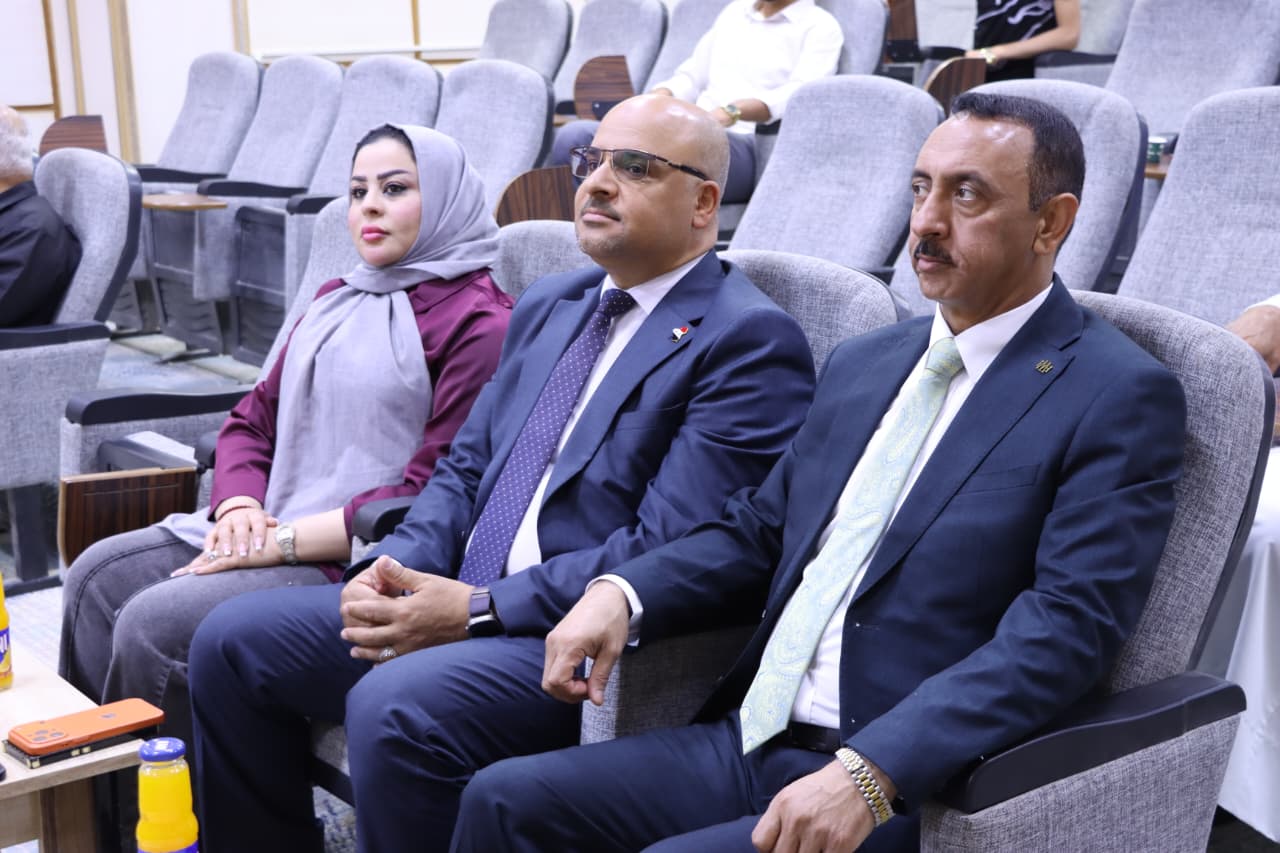
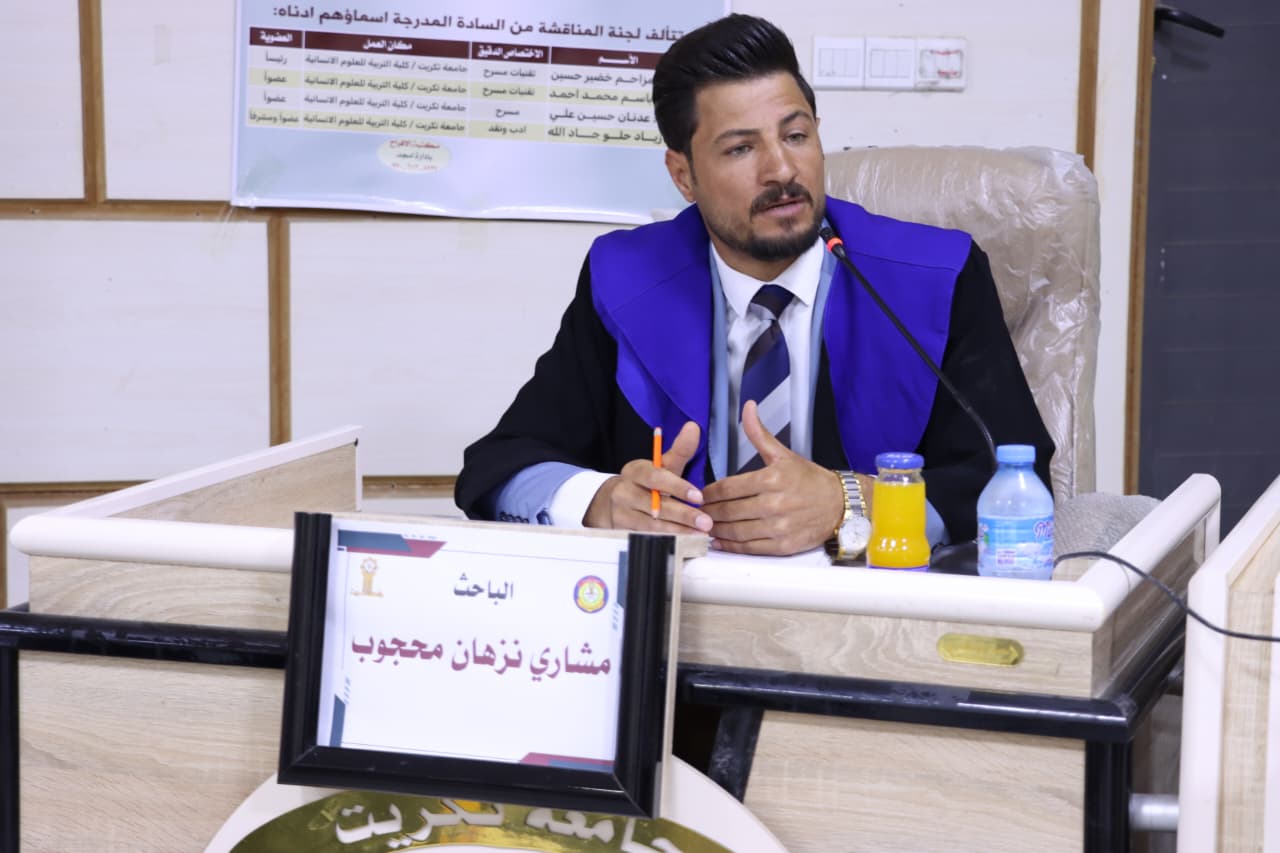
A master’s thesis entitled “The Aesthetics of Symmetry in Children’s Theatre Performances” was discussed at the Department of Art Education, College of Education for Humanities, on Sunday, May 17, 2026, by the student Mishari Nazhan Mahjoob Al-Jubouri.
The study highlighted the significant role of symmetry in theatrical performances in constructing the visual image as both an aesthetic and intellectual value that conveys symbolic and semantic codes. It further examined the role of the audience in receiving and interpreting these symbolic meanings. Symmetry is considered one of the most essential elements of composition alongside other elements such as rhythm, focus, harmony, and contrast. The research emphasized that asymmetrical theatrical imagery may evoke feelings of anxiety and discomfort among viewers.
The thesis also addressed the development of symmetry in theatrical art throughout the historical evolution of theatre. Material symmetry was predominantly used before the emergence of realism; however, with the rise of anti-realistic movements, theatre practitioners recognized that traditional symmetry alone was insufficient in addressing the complexities of visual imagery in theatrical performances. Consequently, aesthetic symmetry derived from the visual arts was incorporated into theatrical practices to enhance the treatment of visual composition in stage performances.
The examination committee consisted of the following faculty members:
- Associate Professor Muzahim Khudair Hussein / Tikrit University – College of Education for Humanities / Chairperson
- Associate Professor Basim Mohammed Ahmed / Tikrit University – College of Education for Humanities / Member
- Associate Professor Adnan Hussein Ali / Tikrit University – College of Education for Humanities / Member
- Professor Ziad Hilu Jadallah / Tikrit University – College of Education for Humanities / Member and Supervisor
Media and Government Communication Division
College of Education for Humanities – Tikrit University